Twelve years ago, in Loudoun County, nobody I worked with called it tech week. We called it dress week, and there was a mantra that went with it, passed down from director to director like a recipe nobody had tasted in a while.
Run the show. Notes. Run the show. Notes. Run the show.
Monday through Thursday, the whole thing, top to bottom, every night. Then the cast sat on the apron in costume while an adult read a legal pad out loud at them. Then everybody went home late and came back and did it again. That was the model. I didn't invent it and neither did the people who handed it to me, and I ran it for years because it was what dress week was.
I want to be careful here, because it would be easy to make the people who taught me sound careless and they weren't. They were exhausted. They were doing a show with no budget and no crew and a cafeteria for a green room, and the model they used was the model that had been used on them.
But I watched what it did, and eventually I stopped.
About the name
A sophomore said it to me in a hallway a few years back. Cheerfully, the way you'd mention the weather. "Hell week starts Monday, right?"
She wasn't complaining. That's what stuck. She was fifteen, she loved this, and she had already learned somewhere that the week her show came together was supposed to be the week that broke her. Somebody taught her that, probably without meaning to.
My students call me Mr. CJ and in twenty years I have never once used that phrase. Not as a joke, not as a badge. I don't allow it in my buildings either, which sounds precious until you watch a room change when the adults stop describing the hardest week of the year as a punishment.
Let me be fair to the name first, because it isn't a lie. It describes something real. The most commonly cited explanation for why "hell week" is so specific to schools and community theatres is that the technical rehearsal period gets compressed into too little time with too little planning. That's not an insult to anybody. It's a scheduling fact. A professional house techs a show across many days with a crew that does this for a living. A school gets a week, after school, with students who had a calculus test that morning and a bus to catch.
So the week gets hard. Then somebody gives the hardness a name. And then, slowly, the name becomes the plan.
That's the part I object to. Once a week is called hell, exhausting your cast stops being a design failure and starts being evidence that you're serious about it. Kids brag. Directors brag. And nobody asks whether a sixteen year old crying in a hallway at ten at night is proof of commitment or proof that an adult built the week badly.
Let's be honest: I have been that adult. A company that falls apart by Thursday was not worked hard. It was scheduled badly, and for a long time I was the one doing the scheduling.
The week we actually run
Here is the shape. It hasn't changed in years.
Monday: Act One.
Tuesday: Act Two.
Wednesday: fixes.
Thursday: a full run.
Friday: opening night.
That's one complete run of the show before we open, instead of four.
Splitting the acts is the first thing that changes, and it's the one that costs nothing. Monday only has to be Act One, so the kids whose work lives in Act Two are home doing homework instead of sitting in a cold house for three hours to be useful for forty minutes. And because we're only responsible for half a show that night, when something breaks (something always breaks) we can stop and actually fix it instead of noting it and pushing on, which is what you do when you've promised yourself a full run by ten o'clock.
Then there's Wednesday, which is the day I would defend hardest and the one I almost never see on anybody else's schedule.
Wednesday is for fixes. No run at all. We take everything that didn't work on Monday and Tuesday, in order of how badly it didn't work, and we solve it with the people who need to be in the room and nobody else. The quick change that takes ninety seconds and has sixty. The entrance that collides with a set piece in a blackout. The mic that pops on one specific consonant in one specific line. The transition where three people reach for the same chair.
It is not a glamorous evening. There's a lot of standing around while someone in the booth tries the cue again. But Wednesday is where the show stops being a list of problems and starts being a show, and giving it a whole night is the single most useful thing I've changed about how I work.
Thursday we run it. Once. Then everyone goes home at a reasonable hour on the night before they open, which is a thing that is allowed to happen.
I'm not going to tell you we measured anyone's cortisol. I can tell you what a calm company looks like on a Thursday in October, and I can tell you it does not look like most tech weeks I've walked into as a guest.
Where the director should be standing
In the house, with a notepad, is the traditional answer. For most of this week I think it's the wrong one.
Be on your feet. Be on the deck. Be in the wings on Monday when the Act One transition falls apart, so that you see why it fell apart instead of writing "transition messy" on a legal pad and trying to reconstruct it from memory three hours later. Be at the quick change station when a kid has to get out of a coat and into an apron in the time it takes to play eight bars. Be standing next to the fifteen year old carrying a hot prop past a moving set piece for the first time in her life.
Wednesday especially. Wednesday is a working day, not a watching day, and a director sitting in row G on a fixes night is about to spend three hours solving the wrong problems very efficiently.
You see things from six feet that you cannot see from forty. And the students see you seeing them, which I have come to think matters more.
The group note session should be over
This is the change I'd most like other directors to steal, and it's the one that gets the most pushback.
You know the ritual. The run ends around nine thirty. Everyone sits on the apron, still in costume, still in makeup, and the director reads notes aloud for half an hour while a cast of thirty listens to a handful of their own and the rest of somebody else's. The kid who got the hardest note gets it in front of every person they know.
We don't do that anymore. Individual notes go to the student privately, in writing, and they're asked to bring the fix to the next rehearsal. That's it.
A note is not a verdict delivered to an audience. It's a piece of work handed to a colleague, and a fifteen year old is owed the same discretion a professional would expect to receive. They read it on the way home. They think about it overnight. They come back with it solved, which is a faster fix than being corrected in public, and I've never once had a student implement a note worse because they got it on paper.
General notes still get said out loud and they should. If something genuinely serves the whole company, a pacing problem at the top of Act Two, a safety reminder, a reset everybody has to learn, say it to the room. Say it standing up, in street clothes, in five minutes.
Rule: if a note belongs to one person, it goes to one person. If it belongs to everybody, it is short and it is encouraging.
For parents: why pickup is so late
This is the section I most want families to have, because from the outside the schedule looks unreasonable and all the reasons for it are invisible.
Almost none of a tech night is rehearsing. Here is what's actually happening between call and curtain:
- They eat. Students come straight from a full school day. They have to be fed before anything else, and that isn't a nicety. It's the difference between a focused company and a shaky one.
- Costumes, hair and makeup. For a full company this is not fifteen minutes, it's an operation. Some looks take longer to build than the scene they appear in.
- Microphones. Fitted, taped, numbered, checked. Every pack, every body, every night.
- Lighting checks. Cues get looked at before people have to stand in them.
- Safety checks on stage. Walking the deck, the set, the edges, the dark spots. Every night, non-negotiable.
- Fight call, or intimacy choreography. If the show has either, it gets rehearsed slowly before every single run. That is a hard rule in a professional house and it should be one in a school.
- Then, finally, we start.
- And then it all comes off. Out of costume, out of makeup, everything hung and reset and cleaned for tomorrow.
Add it up and the running of the show is a small slice of the evening. When your kid texts at nine forty that they're still there, that list is what they're still doing.
And why the schedule kept changing
I know. It was annoying. I'd rather tell you the truth about it than pretend it wasn't.
The weeks before tech are when a director is trying to make sure nobody gets called for three hours to work for twenty minutes. Scenes come together at different speeds, some faster than you planned for and some much slower, and the call list moves to follow them. It moves more than I would like. Every one of those changes is an attempt to hand your family back an evening, even though receiving a schedule change at nine at night feels like precisely the opposite.
A fixed, convenient schedule with forty kids sitting in a house doing nothing is not kinder. It just moves the cost to somewhere you can't see it.
And so, Sweeney Todd
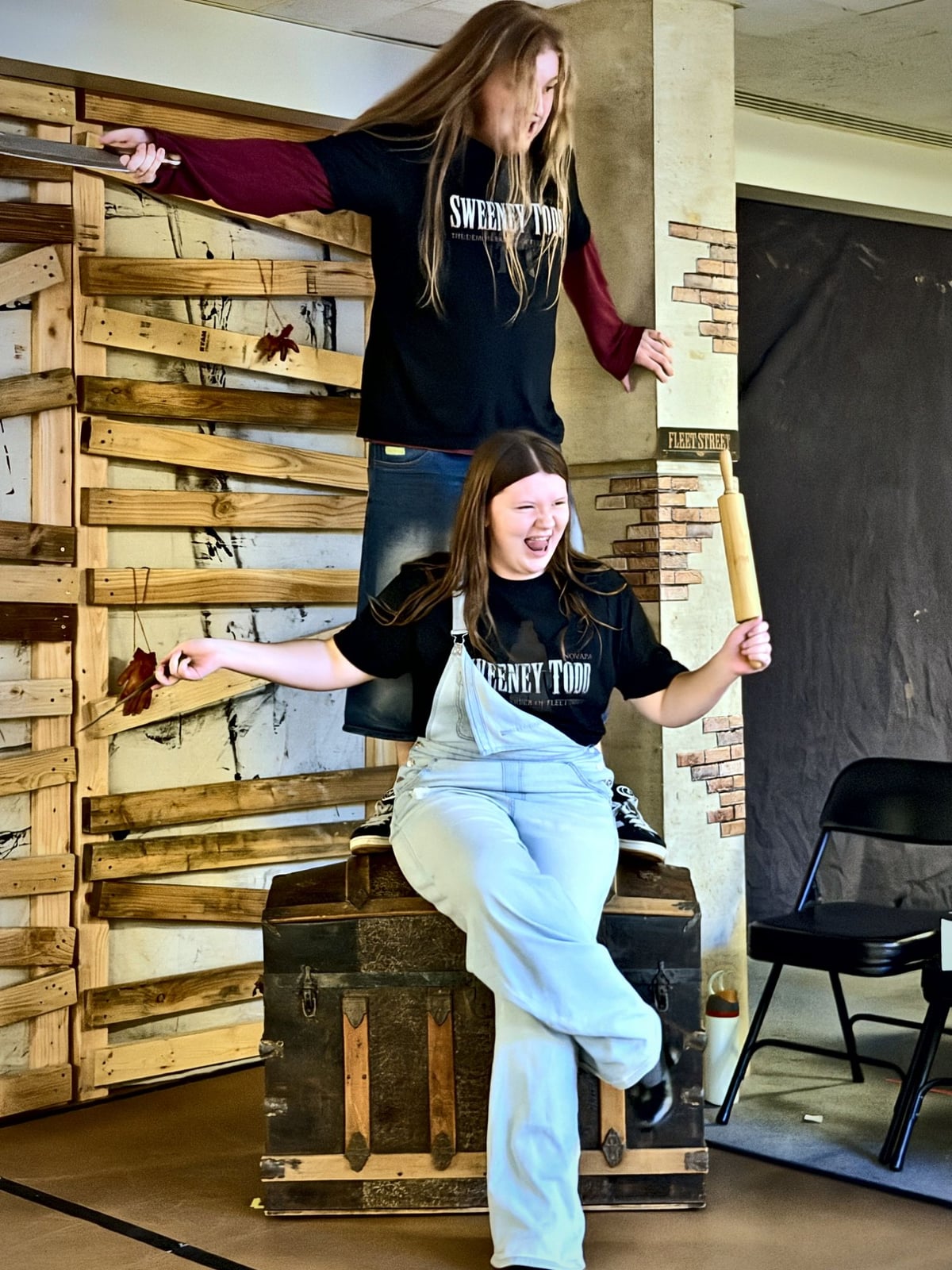
We go into tech this month with our Teen Conservatory company and Sondheim's Sweeney Todd: School Edition, which opens Friday, October 23 at the Loudoun Auditorium at the National Conference Center and runs seven performances over two weekends, closing November 1. These students have been rehearsing since August 24. Two acts, about two and a half hours, and a student technical theatre crew who will call and run the show and take a crew credit in the program next to the cast.
It is a hard show. For most of these teenagers it's the hardest thing they have attempted. And it will be split Monday and Tuesday, fixed on Wednesday, run on Thursday and opened on Friday, same as everything else we do, because a week being hard is not the same thing as a week being cruel.
I'll say the obvious: I don't know yet how this one goes. Sondheim has a way of finding whatever you didn't rehearse. But I know what the schedule is, and I know nobody is going to be wrecked by Thursday, and twelve years ago I could not have told you either of those things.
Closing reflection
If you teach this, you inherited your tech week from somebody. I did. Most of us are running a version of a model that was built by tired people under worse conditions than we have now, and we kept it because it's what we knew and because it does, eventually, produce a show.
It produces a show. That was never the question. The question is what else it produces, and whether a fifteen year old should learn in her first season that making something beautiful is supposed to cost her a week of sleep and a cry in a hallway.
Hard, yes. Long, absolutely. Tired in the good way, the way you're tired after you built something with other people and it stood up on its own.
What I want them to remember about the week the show came together is that it was the week they found out they could do it.
Inspiritu,
Mr. CJ