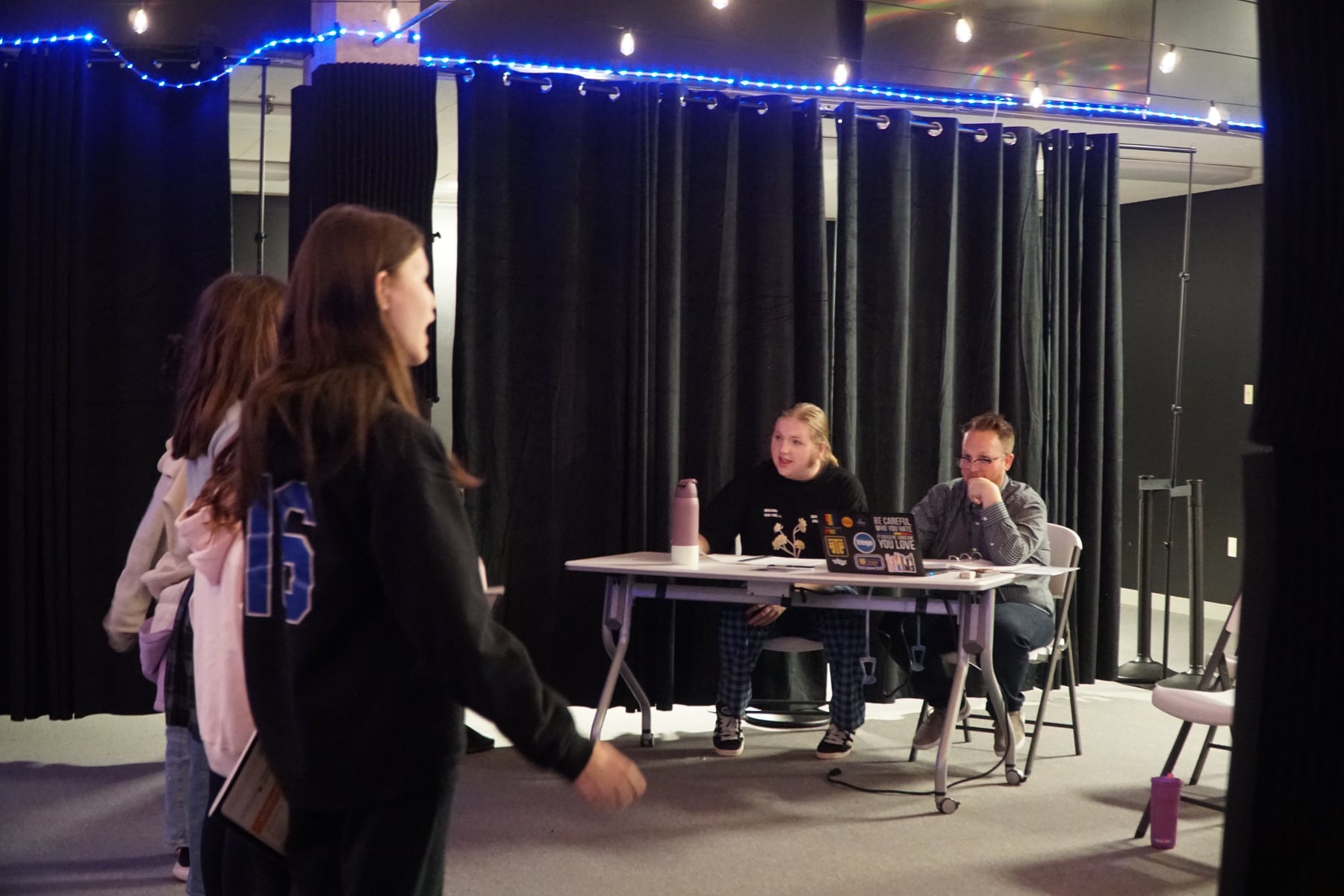
I write the audition notice. Then I get to watch what families do with it.
Every September a half sheet goes home in a backpack, or a PDF lands in a parent portal with a name like FallMusicalAuditionInfo_FINAL_v3, and it says something like: prepare sixteen bars of a song in the style of the show, bring sheet music in your key, wear clothes you can move in, callbacks by invitation. Eleven lines. I have written a version of it every year for twenty years. And every year I watch that half sheet turn into two weeks of kitchen-table drilling, a new outfit, a YouTube rabbit hole, a very tense car, and at least one child who walks into the room having sung the song so many times that there is nothing left in it.
The notice is not the problem. The gap between what it says and what a family thinks it means is the problem. So here is the notice, decoded, and a two-week plan that gets lighter as the audition gets closer instead of heavier. Some of this will feel like the opposite of helping. Stay with me.
How to read the audition notice
Every phrase on that sheet is doing a job. Here is what the common ones actually mean from the chair.
"Sixteen bars" or "thirty-two bars." Roughly thirty to sixty seconds of singing. It is a ceiling, not a target. A clean twelve bars beats a rushed sixteen. Cut to the section with the best singing and a complete thought, not the beginning by default. My earlier piece on the best audition songs for kids covers the cut in detail.
"In the style of the show." Not from the show. If we are doing Seussical, a director wants to hear a song that lives in that neighborhood, something bright and character driven, not "Alone in the Universe" itself, because we have already heard it fourteen times by lunch and because we may be saving it to teach at callbacks.
"Bring sheet music in your key." Printed, in a binder or taped so it lies flat, in the key your child actually sings it in, with the cut marked. This line separates the prepared families from everyone else more reliably than the singing does. If the notice says "bring a track," test the track on the actual device, in the actual room if you can, because the number of auditions I have watched stall while a phone hunts for wifi is not small.
"Wear clothes you can move in." There will be a dance call. Sneakers, not the new shoes. Hair out of the face. The outfit is not a costume and nobody is grading it.
"Callbacks by invitation." This is the line that causes the most pain, so let me be exact. Not being called back does not mean not being cast. I call back the four kids I cannot decide between for one role. The twelve I have already decided on for other roles, including some leads, often do not get a callback at all because I do not need to see them again. A callback is a question I still have. Not getting one is frequently the answer already being yes.
Two weeks out: choose, cut, and practice with a piano
The first week is the only week that should feel like work.
Choose the song together, and choose for range and honesty rather than for impressiveness. A song that sits in the comfortable middle of your child's voice and is about something they can actually mean will beat a big song sung at seventy percent every single time. Get the cut settled and the sheet music printed in the right key by the end of the weekend, because the rest of the plan depends on having it.
Then practice with a piano or a backing track, not a cappella. This is the single most useful change most families can make. Singing alone in a bedroom is a solo sport. Singing with an accompanist is a duet, and the skill that matters in the room is holding pitch and tempo against something that does not wait for you. If nobody in the house plays, a karaoke or accompaniment track from a music app is fine. Three or four times through per day is plenty. More than that and the song starts to go flat in the way overwatered plants go flat.
If the notice mentions a cold read, do not rehearse a monologue. Read aloud at dinner, anything, for five minutes. The skill is reading with your face, not memorizing.
One week out: the messy run and the one uncomfortable listener
Now change the conditions instead of adding repetitions.
The messy run is this: have your child do twenty jumping jacks, or run up and down the stairs twice, and then sing the cut immediately, out of breath, heart going. That is what the audition room feels like from the inside. A child who has hit the notes with a pounding heart in the living room trusts themselves when the pounding shows up for real. Twice that week is enough.
The one uncomfortable listener is somebody who is not you. A grandparent who is a little stern. A neighbor. The piano teacher. Someone sitting behind a table with a pen, saying nothing, taking one note. Your child needs to have been watched by a stranger once before the day it counts, and the parent cannot be that stranger because the parent has already seen every version of the song and cannot pretend otherwise.
And rehearse the walk-in. This sounds silly and it is half of what a director remembers. Walk to the middle of the room. Say your name and the song and the show it is from, to the table, like a person. Hand the accompanist the music with the cut marked, say "thank you," and go stand on the mark. Two minutes of practicing that, twice, and your child owns the eight seconds that frame everything else.
Three days out: stop adding
Here is the part families fight me on.
The last real practice happens around the middle of the final week. After that, nothing new. No new song. No changing the cut. No "let's try it in a different key." No last run-through the night before, and I mean it, because the night-before run-through is not for the child. It is for the parent, and the child can tell.
What I have noticed, over a lot of Septembers, is that the kids who walk in flat are almost never under-rehearsed. They are over-rehearsed by loving adults who kept adding right up to the door, and the song has been sung so many times that it no longer belongs to anybody. Let it sit. It will be there on the day, and it will be fresher for the rest.
The three-days-out job is logistics. The binder packed, with the music in it. The moving clothes and the sneakers laid out. A water bottle. Sleep, real sleep, two nights running, because one good night before an audition does not undo four bad ones.
The day of: the parent's whole job is smaller than you think
Feed them something real. Get there early enough that the hallway stops being new. At the door, one short true thing: "I cannot wait to hear about it." Not "you'll be great," not "don't be nervous," not "remember to," and if you want the reasons for that, they are in my piece on helping a child with stage fright. Then leave the hallway. If your child can see you, part of their brain stays with you, and the room needs all of it.
Afterward, in the car, do not debrief. Ask what the room was like. Ask who else was there. Ask whether the accompanist was nice. Your child already knows exactly what went wrong within four seconds of it happening, and so does the director, and neither of them cares as much as you are about to.
What a director is actually scoring that your child cannot see
Parents imagine the sheet in front of me has a column for the high note. It does not, and the things it does have on it are worth knowing, because they are mostly not about the song.
I am scoring whether your child listens. When I say "great, now try it like you are telling a secret," does anything change, or do I get the same sixteen bars back? That single adjustment tells me more about the next eleven weeks than the singing does, because a kid who can take a note in the room can take a note in rehearsal, and I am choosing rehearsal partners, not a recording.
I am scoring the dance call, and not for the dancing. I am watching what a child does while learning something they are bad at in front of other children. Do they keep going. Do they laugh at themselves. Do they help the kid next to them find the count. That behavior is what I will be living with in a room full of thirty-five kids every afternoon until December.
I am scoring the hallway. Who is kind to the nervous kid. Who is on their phone. Who says thank you to the parent volunteer at the sign-in table. I hear about all of it, and I would rather cast a generous ensemble member than a gifted soloist who makes the room worse.
And I am scoring the walk-in and the thank-you, because a child who can do those two things like a person has already shown me they can be present under pressure, which is the whole job.
When the cast list goes up
Wait for your child to bring it up. Then say something short and true. "I know you wanted that one. I am glad you are in the show." That is enough. Longer than that and you are consoling, and consolation tells the child something bad happened.
Do not call the ensemble a consolation prize, out loud or with your face. In a school musical the ensemble is onstage more than most of the leads, has the best numbers, and is where I put the kids I want to keep watching. Some of the strongest performers I have ever directed spent their first two shows in the ensemble because that is where I could give them the most to do.
Do not email the director to ask why. I understand the impulse, and I will answer, and the answer will not help, because casting is a puzzle with thirty-five pieces and the reason your child is here rather than there is usually about eleven other kids. What the email does accomplish is teach your child that outcomes get appealed by parents, which is a lesson that follows them into every room after this one.
Ask instead what they are excited to do in the show. Then let the season answer the question the cast list could not. I have never once had a child at closing night wish they had skipped it over the part they did not get.
Closing reflection
I have been writing that half sheet for two decades and I still get it wrong, in the sense that eleven lines cannot carry everything a family needs to know and I have stopped pretending they can. This is the rest of it.
Your child needs a song they can mean, a piano to sing it against, one stranger to sing it for, and then three days of being left alone with it. The rest is you being calm at a door and asking the right question in a car.
They will not remember the sixteen bars. They will remember whether the two weeks before felt like a test or like something they got to do. Make it the second one.
Inspiritu,
Mr. CJ